
Introduction
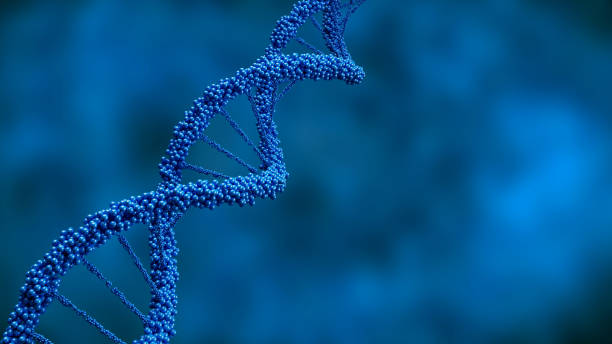
Nucleotides are the fundamental building blocks of life. These small yet incredibly important molecules form the foundation of genetic material in all living organisms. Without nucleotides, there would be no DNA or RNA — the molecules that store, transmit, and express genetic information essential for the growth, reproduction, and survival of cells.
In this article, we will explore what nucleotides are, their structure, function, and biological significance, as well as how they play a vital role in modern science, medicine, and biotechnology.
What Are Nucleotides?
Nucleotides are organic compounds composed of three key components:
-
A nitrogenous base
-
A sugar (pentose)
-
A phosphate group
Together, these three parts create a molecule that serves as the basic unit of nucleic acids such as DNA and RNA. Each nucleotide acts like a “letter” in the genetic alphabet that determines how proteins are built within organisms.
Structure of a Nucleotide
Every nucleotide consists of three major parts:
1. Nitrogenous Base
The nitrogenous base determines the identity of each nucleotide and comes in two types:
-
Purines: Adenine (A) and Guanine (G)
-
Pyrimidines: Cytosine (C), Thymine (T), and Uracil (U)
In DNA, the four bases are A, G, C, and T. In RNA, uracil (U) replaces thymine.
2. Sugar Component
The sugar in a nucleotide is a five-carbon molecule called a pentose:
-
Deoxyribose in DNA
-
Ribose in RNA
The difference between the two sugars lies in the presence or absence of one oxygen atom. Ribose has a hydroxyl group (-OH) on the second carbon, while deoxyribose has only a hydrogen atom (-H).
3. Phosphate Group
The phosphate group attaches to the sugar and links nucleotides together through phosphodiester bonds, forming long chains known as nucleic acids.

Nucleotides vs. Nucleosides
The terms nucleotide and nucleoside are often confused, but they are not the same:
-
A nucleoside consists of only a base and a sugar.
-
A nucleotide has a base, a sugar, and at least one phosphate group.
For example:
-
Adenosine is a nucleoside.
-
Adenosine monophosphate (AMP) is a nucleotide.
Types of Nucleotides
Nucleotides can be classified based on their functions in the cell:
-
DNA Nucleotides: A, T, G, and C – used to build DNA.
-
RNA Nucleotides: A, U, G, and C – used to build RNA.
-
Energy-Carrying Nucleotides: ATP (adenosine triphosphate), GTP, CTP, and UTP.
-
Signaling Nucleotides: cAMP (cyclic adenosine monophosphate) and cGMP.
-
Coenzyme Nucleotides: NAD+, FAD, and coenzyme A – crucial for metabolic reactions.
Functions of Nucleotides
1. Storage of Genetic Information
The most well-known role of nucleotides is their involvement in DNA, which stores the genetic blueprint of life. The unique sequence of four bases (A, T, G, C) encodes instructions for protein synthesis.
2. Transmission of Genetic Information
RNA transmits genetic information from DNA to the ribosomes, where proteins are produced. This process is known as transcription and translation.
3. Energy Transfer
ATP, or adenosine triphosphate, is often called the “energy currency” of the cell. When ATP is broken down into ADP (adenosine diphosphate), it releases energy that powers many cellular processes, including movement and biosynthesis.
4. Cell Signaling
Cyclic nucleotides like cAMP act as secondary messengers that help transmit signals within cells. They regulate functions such as glucose metabolism, hormone responses, and cell growth.
5. Coenzymes in Metabolism
Many nucleotides serve as parts of coenzymes that assist in vital biochemical reactions — for example, NAD+ in cellular respiration and FAD in oxidation-reduction reactions.
Biosynthesis of Nucleotides
Cells produce nucleotides through two main pathways:
-
De novo synthesis: The cell builds nucleotides from small molecular precursors such as amino acids, ribose, and folic acid.
-
Salvage pathway: The cell recycles degraded bases or nucleosides to form new nucleotides.
Both pathways are carefully regulated to maintain balance among different nucleotide types, ensuring proper DNA and RNA synthesis.
Disorders Related to Nucleotide Metabolism
When nucleotide metabolism malfunctions, it can lead to serious health conditions:
-
Adenosine deaminase deficiency (ADA): Causes severe combined immunodeficiency (SCID).
-
Gout: Results from excessive uric acid, a byproduct of purine breakdown, leading to joint inflammation.
-
Lesch-Nyhan Syndrome: A rare genetic disorder caused by a deficiency in the enzyme HGPRT, leading to neurological and metabolic problems.
Nucleotides in Medicine
Nucleotides have become central to modern medical science. They are used in:
-
Antiviral Drugs – Many antiviral medications mimic nucleotides to disrupt viral DNA or RNA replication (e.g., treatments for HIV and hepatitis B).
-
Cancer Therapy – Certain chemotherapy drugs target nucleotide synthesis to stop cancer cells from multiplying.
-
Genetic Therapy – Scientists use nucleotide-based technologies to repair or modify defective genes.
-
Diagnostics – Techniques like PCR (polymerase chain reaction) use nucleotide replication to detect viruses, bacteria, and genetic disorders.
Nucleotides in Biotechnology
Modern biotechnology relies heavily on nucleotides and their synthetic forms. They are essential in:
-
mRNA vaccines (such as COVID-19 vaccines) that use modified nucleotides to trigger immune responses.
-
DNA sequencing to map genomes and identify genetic mutations.
-
Gene editing technologies like CRISPR-Cas9, which manipulate nucleotide sequences.
-
Biosensors and diagnostic tests for medical and environmental applications.
These advancements demonstrate that nucleotide research continues to revolutionize medicine and biotechnology.

Evolutionary and Genetic Importance
Nucleotides are also at the heart of evolutionary biology. Mutations — changes in the order of nucleotides — are the source of genetic variation, which drives evolution through natural selection.
By studying nucleotide sequences, scientists can trace evolutionary relationships between species and reconstruct the history of life on Earth.
Interesting Facts About Nucleotides
-
The human genome contains approximately 3 billion nucleotide pairs.
-
Each human cell consumes and regenerates millions of ATP molecules every second.
-
Groups of three nucleotides, called codons, determine one amino acid in a protein sequence.
Summary
Nucleotides are far more than simple chemical units — they are the foundation of life itself. They store and transmit genetic information, provide energy for cellular activities, and regulate countless biochemical processes.
Without nucleotides, there would be no DNA, no RNA, and no life as we know it. Their study not only deepens our understanding of biology but also fuels breakthroughs in medicine, genetics, and biotechnology.
Nucleotides represent the perfect example of how something so small can have an immense impact on the world.
