
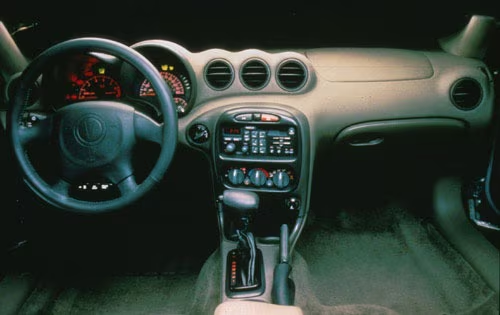
The Pontiac Grand Am occupies a curious and multifaceted chapter in American automotive history. Over three decades of production, it evolved through distinct generations, shifting platforms, changing priorities, and fluctuating market fortunes. What began as a mid-size sporty luxury offering in the 1970s eventually ended as a compact front-wheel-drive model in the early 2000s. Through it all the Grand Am bore the hallmarks of the Pontiac brand: bold styling, sporty aspirations, and the perennial balancing act between performance, comfort, and economy. In this article we’ll explore its origins, generational development, design and mechanical features, strengths and weaknesses, and its legacy today.
Origins and the 1973-75 First Generation
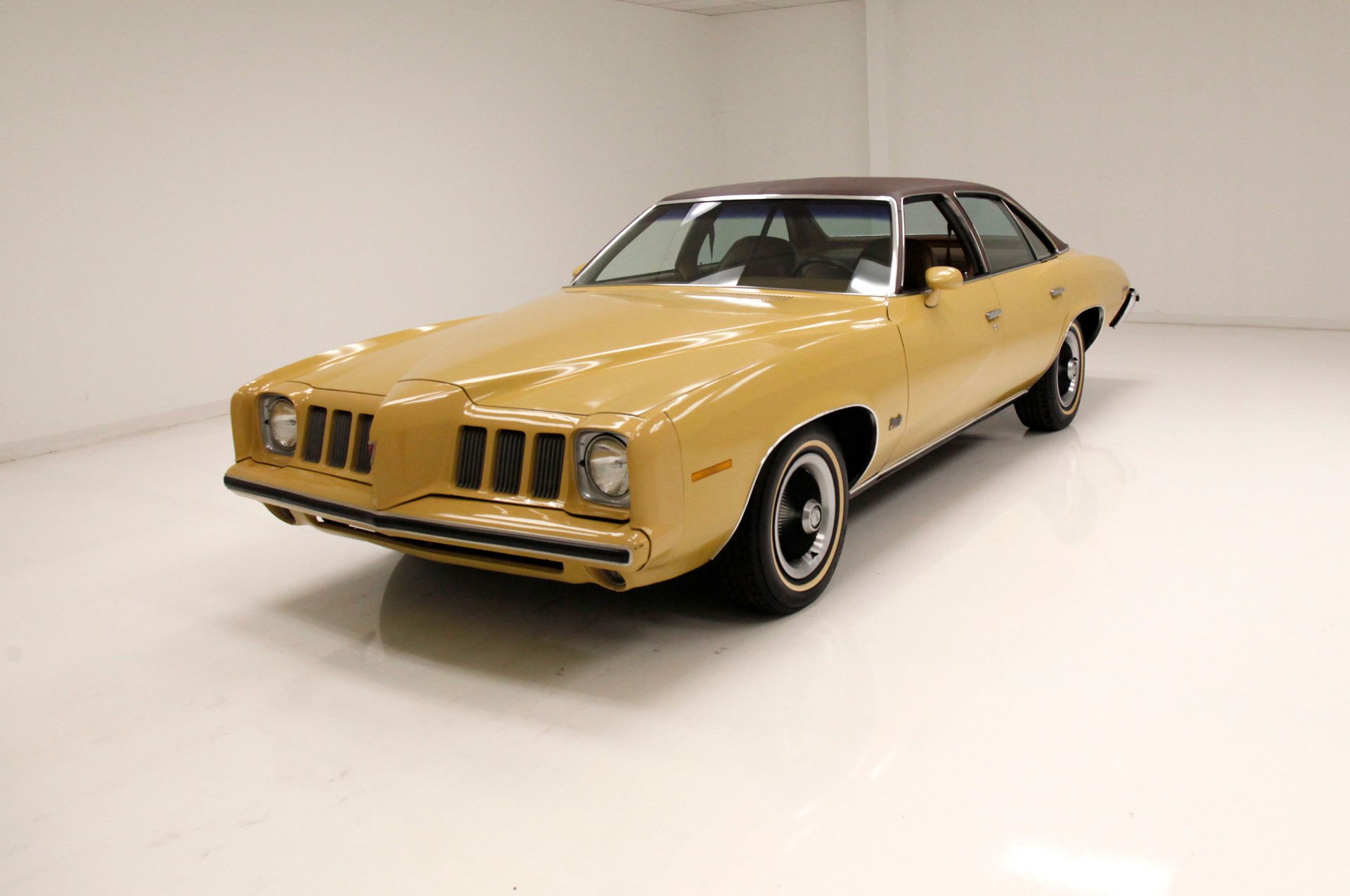
The Grand Am name first appeared in the autumn of 1972 as a model for the 1973 model year. Unlike many other Pontiac models of the era, the goal for the Grand Am was not simply raw muscle car performance, but rather a synthesis of sport and luxury. The name itself borrowed from two other Pontiac icons: “Grand” from the Grand Prix luxury line and “Am” from the Trans Am performance badge.
Built on the General Motors A-body platform (shared with models such as the LeMans, GTO, and others) the first generation Grand Am offered a combination of performance oriented features—such as radial-tuned suspension—and upscale touches intended to position it between pure performance and upscale touring.
Visually, the 1973 Grand Am featured a distinctive urethane-nose front end (an evolution of Pontiac’s Endura bumper concept) and standard radial-tuned suspension. However, timing was challenging. The oil crisis of 1973, tighter emission regulations, and shifting consumer demands placed pressure on performance cars of this era. As one historian puts it, the Grand Am was “right place, wrong time.”
Production of this first run lasted through 1975. Despite the appealing concept, sales were modest.
Mechanically, there was a choice of potent V8s including a 400 ci and even a 455 ci in some variants: one early Grand Am could be optioned with a 455 ci V8 capable of 250 hp.
Ultimately, the increasing demand for fuel efficiency and tighter emissions made large-engine, performance-oriented intermediates difficult. GM and Pontiac shifted away and the model was dropped at the end of 1975.
Key takeaways from generation one:
-
Innovative blend of sport and luxury for its time.
-
Strong mechanical pedigree but hit by external economic and regulatory forces.
-
Its rarity today gives it collector interest, though it never matched its intent in sales.
The 1978-80 Return: Downsized and Re-imagined
After a hiatus, the Grand Am name re-appeared in 1978, now on a downsized version of the GM A-body platform. The aim was to capture refreshed interest by moving to a smaller size, which reflected the market’s new emphasis on economy and efficiency. The model ran through the 1980 model year. Wikipedia
This generation featured two-door coupé and four-door sedan versions, styling enhancements to differentiate from the standard LeMans, and some suspension tweaks. But the core challenges remained: a shrinking market for that niche space between economy and full luxury. Sales slipped, and after 1980 the Grand Am was again discontinued, replaced by the Pontiac 6000 in the Pontiac lineup.
This chapter is often less celebrated than the later years, but it demonstrates Pontiac’s attempt to adapt to rapid shifts in consumer demand. The Grand Am name lived on, even if the early returns were underwhelming.
The 1985-2005 Era: Front-Wheel Drive Compact and the Rise of the Grand Am
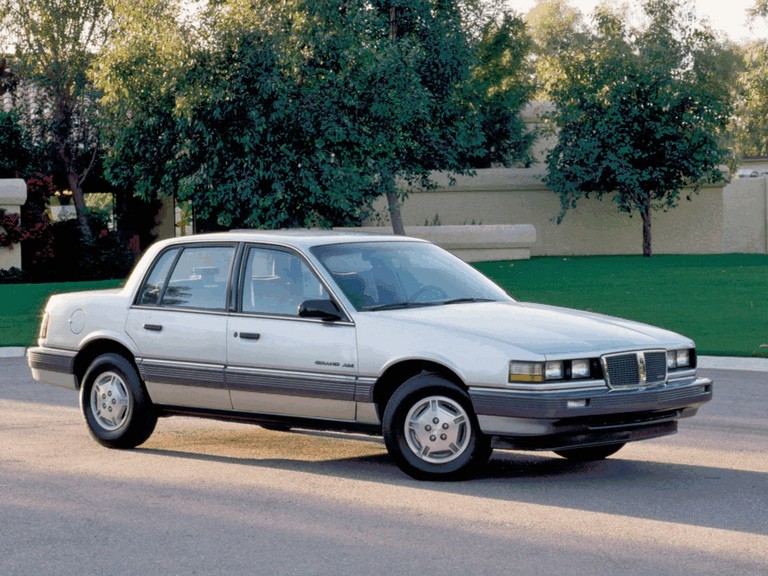
The real turning point for the Grand Am came in 1985, when Pontiac reintroduced the name on a front-wheel-drive compact platform (GM N-body) replacing the Phoenix. Wikipedia+1 This reinvention aligned the car with common market trends of the 1980s and 1990s: smaller overall size, more fuel efficient engines, front-wheel drive configuration, and a broader appeal as a sporty yet affordable car.
Third and Fourth Generations (1985–1997)
In this period, the Grand Am offered sedans and coupes in trims like LE and SE with engine options including 2.5 L 4-cylinders and optional 3.0 L V6s depending on year and market. Wikipedia+1 The 1990 model year is notable because by June of 1989 the one-millionth Grand Am had rolled off the line. conceptcarz.com
The model gained popularity. By the mid-1990s it had become one of Pontiac’s top sellers. For example a 2001 review noted that the Grand Am had been Pontiac’s top seller since 1986. drivechicago.com
Styling over these years evolved from sharper lines and sporty cues toward smoother forms by the mid-1990s. Mechanically the model improved incrementally with better suspension tuning and drivetrain refinements. However criticisms included some build-quality issues and the fact that, while sporty in appearance, it was never on par with premium sport sedans.
Fifth Generation (1998–2005)
For 1998 the Grand Am underwent a major redesign. A key mechanical update for 1999 included entirely independent suspension (MacPherson struts up front, multi-link in the rear), a stiffer body and a wider wheelbase. Engine line-ups included a 2.2 L 4-cylinder (141 hp) and a 3.4 L V6 (173–175 hp) in later years.
This generation represented the Grand Am in its most familiar form to many consumers. It was affordable, accessible, with sporty styling cues, and widely used as daily transportation in North America. It remained in production until May 2005, when the last Grand Am rolled off the line.
Notable strengths of this era:
-
Broad availability of parts and service due to common GM components.
-
Affordable price point and decent feature content for its class.
-
Recognizable styling and brand recognition among younger buyers.
Challenges:
-
While “sporty,” the performance did not match premium rivals; many enthusiasts felt it was more appearance than substance.
-
Resale value was modest and some models suffered from reliability or build issues over time.
-
When the nameplate ended, Pontiac’s discontinuation limited the long-term brand support.
Design and Engineering Highlights
Exterior and Styling
The Grand Am’s styling journey reflects its changing mission. The first generation featured bold, sweeping lines, the urethane nose, wide proportions—ambitious for its time. The post-1985 compact versions introduced sharper edges, aggressive front grilles, and sporty leanings. The 1999 redesign softened the curves, enhanced aerodynamics and integrated more modern proportions while retaining the “sporty compact” look. Automotive reviewers for the 2001 model year praised its distinct styling in a sea of look-alike compacts.
Drivetrain and Performance
Across generations the Grand Am offered a range of engines and drivetrains depending on era:
-
Early 1970s: V8s such as 400ci and 455ci, rear-wheel drive. MotorTrend+1
-
1985–1990s: Four-cylinders and V6s, now front-wheel drive, more economy oriented. conceptcarz.com+1
-
1998–2005: Enhanced suspension, 2.2–2.4 L four-cylinders, and 3.4 L V6s in GT trims; independent suspension.
Reviewers of the early 2000s Grand Am noted the 3.4 L V6 gave smooth strong performance and good highway cruising comfort.
Chassis and Handling
One of the strengths often cited is the chassis improvement in the 1999 redesign: independent rear suspension, stiffer body, better ride and handling compared with earlier versions. SlashGear While it was not on the level of premium sport sedans, for its class it held its own and showed that Pontiac hadn’t forgotten its performance roots.
Market Position, Sales and Demographics
The Grand Am’s most enduring success came in the 1980s through early 2000s when it appealed to younger buyers who wanted sporty looks without exorbitant cost. The model became one of Pontiac’s volume sellers. For example, in the early 1990s the model was still selling in six-figure volumes. Wikipedia
Ironically, its strengths also planted some of its weaknesses: being ubiquitous and affordable meant its resale values were modest. An analysis of resale value by generation puts the fifth generation (1999-2005) as the most common on the road today, and being easily found means bargain pricing. SlashGear
From a buyer’s perspective, the Grand Am offered a blend of value, looks, and brand legacy. From a brand perspective, Pontiac used it to maintain volume in an era when larger RWD performance cars were declining rapidly.
Strengths and Weaknesses: A Balanced View
Strengths
-
Broad availability of parts and service for later models (especially 1990s-2000s).
-
Sporty styling and brand image: the Grand Am looked more aggressive and exciting than many standard compact sedans of its time.
-
Practicality: in later years the front-wheel-drive compact format offered usable everyday space, adequate engines, and decent fuel economy for the time.
-
Legacy appeal: the earlier generations (1970s) have niche collector interest and unique styling cues.
Weaknesses
-
Refinement: In some years the Grand Am delivered the sporty look but not necessarily the premium feel. Some reviews noted build-quality issues. For example one owner commented that certain intake gaskets or brakes developed issues on early 2000s versions.
-
Performance ceiling: While sporty in appearance, many versions did not match the handling or engine performance of dedicated sport sedans from premium marques.
-
Resale and long-term value: Because many were built and used as everyday cars, many later are in high-mileage or rough condition, impacting long-term value.
-
Brand discontinuation: When Pontiac as a brand was shuttered (in 2010) the lack of ongoing support and brand presence limited long-term ownership perception.
The Grand Am in the Pakistan and International Context
While the Pontiac brand was never officially distributed in Pakistan, the global footprint of GM’s older models means that used-import markets occasionally surface vehicles like the Grand Am in certain regions. For car enthusiasts in Lahore or other Pakistani cities the Grand Am can hold niche appeal, either as a unique import project or as a collector’s piece for the earliest generations (1970s). If one were to source a Grand Am in Pakistan, here are some localised considerations:
-
Parts and Service Availability: Given that Pontiac is no longer active, sourcing specific components may be a challenge. Better availability of generic GM parts may help for later models (1990s-2000s) that share components with other GM cars.
-
Import and Registration: Import duties, registration compliance, emissions laws and availability of inspection certification can vary by province. One must check local regulations carefully.
-
Condition and Rust: Be vigilant about rust and condition. Many later Grand Ams in North America suffered corrosion, and long-distance shipping/import may hide issues.
-
Collector Potential: The early 1973-75 models, with their distinctive styling and limited production, may have higher collector value and may warrant careful restoration rather than daily usage.
-
Practical Use: Given local fuel prices and service access, later models with efficient four-cylinders or earlier V6s may be more practical than early big-block V8 versions.
Legacy and Collector Interest
The Grand Am nameplate may no longer exist, but its legacy lives on in multiple ways. For starters, when the last Grand Am rolled off the line in May 2005 it marked the end of an era for Pontiac’s compact sporty car niche.
Collectors increasingly prize the first-generation 1973-75 Grand Am cars for their rarity and distinctive design features. One barn-found 1974 example has been documented and serves as a reminder of how few remain.
In the broader enthusiast community, the Grand Am’s story is appreciated for what it tried to do: blend sport and luxury, evolve with market demands, and maintain accessible performance at a mainstream price point. As one review put it, the Grand Am was “Pontiac’s top-seller since 1986” in its compact form. drivechicago.com
Yet even as the brand and model fade from mainstream visibility, the Grand Am serves as a nostalgic symbol of 1980s-2000s American automotive culture—a time when you could buy a sporty compact from a mainstream brand and feel like you had more than just transport.
What to Look For If Buying a used Grand Am
If you are considering purchasing a used Grand Am—either for daily use, import, or restoration—here are a few areas to pay attention to:
-
Service history and mileage: Later Grand Ams were built in large numbers and many may have high mileage or deferred maintenance. Check records for engine maintenance, transmission service, and previous accidents.
-
Rust and body condition: Especially if imported or used in coastal/humid climates, check underbody, wheel arches, suspension mounting points, and trunk floors.
-
Engine and transmission health: For V6 models check for oil leaks, cooling system condition, head-gasket or intake-gasket failures (which were highlighted by some owners). For automatic transmissions ensure smooth shifting.
-
Suspension and brakes: The 1999 redesign improved chassis and handling, but aftermarket wear and previous usage may have degraded suspension components.
-
Parts availability: In Pakistan or other non-US markets check that necessary parts (filters, brake components, belts, hoses) can be sourced locally or via import without excessive cost.
-
Registration and compliance: Make sure the vehicle can be legally registered under local import rules and that emissions or other compliance requirements are met.
-
Purpose of ownership: If the intention is restoration of a 1970s Grand Am, expect higher costs and part scarcity; if the intention is daily use of a late-model Grand Am, focus on reliability and practical condition.
Final Thoughts
The Pontiac Grand Am may not have reached iconic status in the way some muscle cars or premium sport sedans have, but it deserves recognition for its versatility, longevity, and the role it played in Pontiac’s lineup. From its ambitious start in the 1970s through to its broad volume success in the 1990s and early 2000s, the Grand Am evolved with changing market dynamics while retaining a sporty soul.
For motoring enthusiasts in 2025 and beyond, the Grand Am offers a blend of nostalgia, practicality (especially for later models) and uniqueness. Whether you see one on the road, in a classic car show, or tucked away in a collector’s garage, the Grand Am stands as a reminder of a time when mainstream sport compacts were both accessible and aspirational.
If you’re in Pakistan and considering one, treat the Grand Am as a project with potential—be prepared for logistics, parts sourcing, and condition assessment—but also enjoy the distinctiveness of owning a model with a genuine American heritage. The Grand Am might not be the flashiest or the most expensive, but it carries with it decades of history, evolution, and everyday performance.
In short, the Pontiac Grand Am was more than just a car. It was a reflection of shifting automotive priorities, a bellwether for Pontiac’s ambitions, and ultimately a vehicle that brought solid sport-oriented mobility to many everyday drivers. Its legacy endures because it touched on something many buyers want: fun, utility, style, and a sense of identity on the road.
